
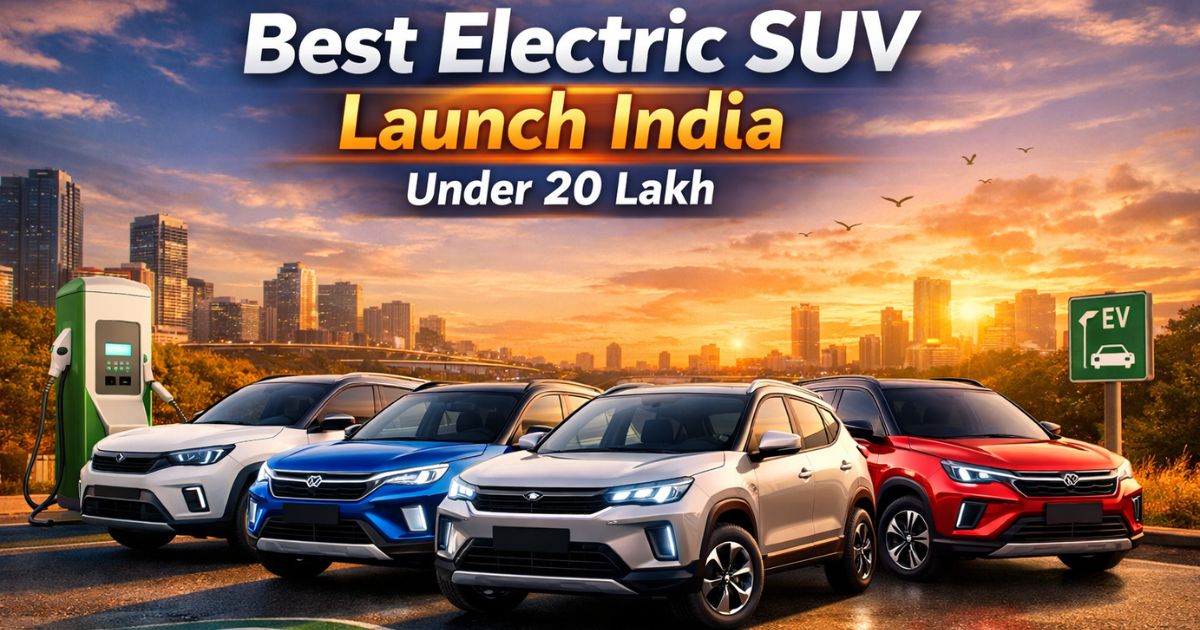
If you’ve been searching for the best electric SUV launch India under 20 lakh, you’re probably planning your next car purchase and wondering which EV SUV is worth your money. With EV adoption accelerating fast in India, several manufacturers are gearing up to launch affordable electric SUVs that are practical, feature‑packed, and easy on the pocket.
In this guide, we’ll talk about all the important electric SUVs expected in 2026 under ₹20 lakh — what they offer, how far they can go, what charging looks like, and what you should check before booking.
Let’s get started!
Why EV SUVs Under ₹20 Lakh Are a Big Deal in India
Electric cars are no longer just expensive city runabouts. Indian buyers now want SUVs — roomier vehicles with punchy performance and real everyday usability. Here’s why EV SUVs under ₹20 lakh are gathering attention:
- Lower running cost than petrol/diesel cars
- Less pollution, better for city driving
- Government incentives make them affordable
- Growing charging network, especially in big cities
- SUVs offer space, comfort, and practicality
As fuel prices go up and running costs matter more than ever, electric SUVs under ₹20 lakh are becoming a sensible choice — not just a trend.
Read More: New EV Launches in India March 2026 Checklist – The Ultimate Guide to Confident EV Buying
Best Electric SUV Launch India Under 20 Lakh – Top Contenders (2026)
Below are the most talked‑about electric SUV launches that are expected to hit Indian roads in or around March–mid 2026.
1. Maruti Suzuki e‑Vitara / Toyota Urban Cruiser EV
Expected Price: ~₹15–20 lakh (ex‑showroom)
Estimated Range: ~350–400 km real‑world
Charging: Home AC + Fast DC
Maruti Suzuki is entering the electric SUV space with its e‑Vitara, and Toyota is likely to launch a very similar version called the Urban Cruiser EV. These are expected to be the most noticeable launches in this price bracket.
Why Buyers Are Excited
- Familiar brand with strong service network
- Practical range for daily use and longer trips
- Multiple battery and trim options
- Toyota version could feel slightly more premium
Pros
- Very good mileage for Indian city conditions
- Easy service and spare parts availability
- Proven reliability of small‑to‑mid SUV platform
Cons
- Battery‑as‑a‑Service (BaaS) pricing can be confusing
- Full upfront purchase price may go over budget if battery is bought outright
2. Tata Sierra EV
Expected Price: ₹16–22 lakh
Estimated Range: ~380–450 km real‑world
Charging: AC + Fast DC
Tata Sierra EV brings back an iconic name in an all‑electric avatar. It’s expected to be roomy, feature‑rich, and practical for Indian families.
Why It’s Worth Considering
- Spacious SUV body
- Long expected range
- Tata’s after‑sales network is strong across India
Pros
- Great for family trips and long drives
- Features likely to be best‑in‑class
- Good warranty and service backup
Cons
- Price may vary based on variants and battery size
- Waiting period expected after launch
3. Kia Syros EV
Expected Price: ~₹18–20 lakh
Estimated Range: ~300–380 km
Charging: AC + DC Fast
The Kia Syros EV is aimed at buyers who want something stylish and practical in the compact SUV segment.
What Buyers Should Know
- Modern design and tech inside
- A comfortable city‑friendly EV SUV
- Slightly shorter range but still usable for daily commuters
Pros
- Sleek look and feature list
- Comfortable interior for city use
- Compact size ideal for traffic
Cons
- Range may be lower than bigger SUVs
- Availability could vary between cities
4. Mahindra XUV 3XO EV
Expected Price: ₹16–19 lakh
Estimated Range: ~300–380 km real‑world
Charging: Home AC + DC Fast
Mahindra’s XUV 3XO EV is expected to bring the rugged SUV feel into a practical EV package without too heavy a price tag.
What It Brings to the Table
- SUV‑like driving character
- Decent day‑to‑day usability
- Balanced range and features
Pros
- Good value positioning
- Familiar SUV feel for buyers swapping from petrol/diesel
- Expected to be feature rich
Cons
- Real‑world range may dip on highways
- Tech features may lag slightly behind rivals
Read More: Tata Sierra EV Launch Best Guide – Price, Range & Rivals in India
Specification & Range Comparison
Here’s a clear comparison to help you see how these EV SUVs stack up:
| Model | Price (Expected) | Real‑World Range | Charging Support |
|---|---|---|---|
| e‑Vitara / Urban Cruiser EV | ₹15–20 lakh | 350–400 km | AC + Fast DC |
| Tata Sierra EV | ₹16–22 lakh | 380–450 km | AC + Fast DC |
| Kia Syros EV | ₹18–20 lakh | 300–380 km | AC + Fast DC |
| Mahindra XUV 3XO EV | ₹16–19 lakh | 300–380 km | AC + Fast DC |
Real‑world range is usually lower than claimed because city traffic, air conditioning, driving style, and terrain affect battery usage.
Important Factors to Consider Before Booking
Buying an electric SUV is different from buying a petrol or diesel vehicle. Here’s your checklist:
1. Battery Range (Real‑World)
- WLTP / ARAI claims are ideal figures
- In city conditions, real range can be ~15–25% lower
- Highway driving uses more battery
- Battery capacity (kWh) matters more than claimed range
Charging Network & Time
Make sure:
- You can install a home charger
- Your city has public fast charging stations
- You check DC charging time (10–80%)
- 150kW+ fast chargers give most convenience
3. Cost of Ownership
Don’t just compare ex‑showroom prices — consider:
- Battery warranty
- Insurance costs (EVs often slightly higher)
- Less maintenance vs petrol/diesel
- Running cost savings (electricity vs fuel)
4. Government Subsidies
Depending on your state, you could get:
- Central subsidies (FAME)
- State EV incentives (tax waivers or rebates)
- Lower road tax
Always check current subsidy schemes before booking.
5. Service & Support
- Check service center availability near you
- Battery warranty (8 years / 1.6 lakh km ideal)
- Roadside assistance options
Better support means easier ownership.
Real‑World Tips Before You Buy
- Test drive before booking — driving feel matters
- Don’t book before official pricing is announced
- Watch for launch offers / exchange bonuses
- Compare home charging cost vs fast charging cost
Read More: MG Majestor vs Toyota Fortuner: SUV Battle in 2026 (Specs & Value)
Common Myths About Electric SUVs (Debunked)
Myth 1: EV batteries die quickly
Reality: Modern EV batteries retain most capacity for years and are covered by long warranties.
Myth 2: Charging stations are rare
Reality: Public charging is expanding fast in cities and highways.
Myth 3: EVs are more expensive to own
Reality: Lower running cost and government incentives often make EVs cheaper in the long run.
FAQs
1. Which is the best electric SUV under ₹20 lakh?
The best depends on your priorities — Maruti e‑Vitara and Tata Sierra EV are strong all‑rounders, while Syros EV suits urban drivers, and XUV 3XO EV offers value SUV experience.
2. Will charging stations be enough around my city?
Major cities and highways now have fast DC chargers. Check apps like PlugShare or Tata Power EZ Charge for station locations.
3. Do electric SUVs cost more to maintain?
Not really. EVs have fewer moving parts, which often means lower maintenance cost over 5+ years.
4. Can I install home charging?
Yes. Most EV makers include a home charger option. You’ll need a 3‑phase/AC electric outlet at home.
5. Are subsidies still available in 2026?
Subsidies depend on government policy updates — always check both central and state incentives before booking.
Read More: Qualcomm’s $150M AI Fund for India — What Innovative Startups Should Know