
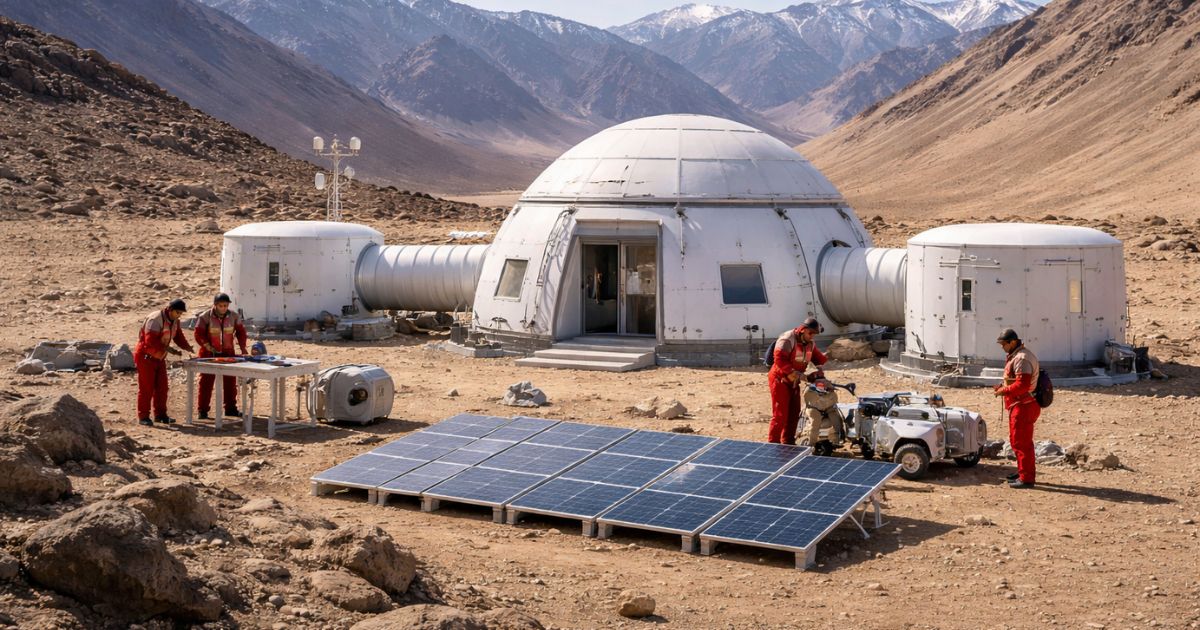
The Ladakh Human Analogue Mission: India’s Space Simulation Breakthrough is one of the most exciting developments in India’s space ecosystem. Instead of sending astronauts directly into orbit, scientists are recreating space-like conditions right here on Earth — in the cold, high-altitude desert of Ladakh.
This mission is not just a scientific experiment. It’s a strategic step toward India’s future human spaceflight ambitions, long-duration missions, planetary exploration, and astronaut training under extreme isolation and environmental stress.
In this detailed guide, we’ll break down what the Ladakh Human Analogue Mission really is, why it matters, how it compares to global space simulation programs, and what it means for India’s space future.
What Is the Ladakh Human Analogue Mission?
The Ladakh Human Analogue Mission is a space research initiative conducted in Ladakh’s extreme high-altitude desert to simulate space-like conditions such as isolation, low oxygen, harsh climate, and limited resources. It helps scientists study human survival, psychological endurance, habitat systems, and operational readiness for future space missions.
Why Ladakh? The Perfect Mars-Like Environment
Ladakh offers:
- High altitude (low oxygen levels)
- Extreme temperature variations
- Dry, rocky terrain similar to Mars
- Geographic isolation
- Limited infrastructure
These factors make Ladakh an ideal analogue site for testing:
- Human physiology in low-oxygen conditions
- Crew isolation behavior
- Closed-loop life support systems
- Space habitat prototypes
In simple terms, Ladakh acts like a “Mars rehearsal zone” for Indian scientists.
Read More : YUVIKA 2026 ISRO Eligibility India Space Program: Complete Guide for Students
Ladakh Human Analogue Mission Explained
The Ladakh Human Analogue Mission focuses on preparing India for long-duration human space missions.
Unlike traditional astronaut training, analogue missions simulate:
Psychological Isolation
Crew members stay confined for extended durations.
Resource Scarcity
Limited water, food, and power usage — just like space stations.
Medical Monitoring
Continuous tracking of:
- Oxygen saturation
- Heart rate
- Cognitive performance
- Sleep cycles
Habitat Testing
Testing space habitat modules that could later be used in:
- Lunar missions
- Mars exploration
- Orbital stations
How This Mission Supports India’s Human Space Goals
India is steadily advancing toward human spaceflight programs and deep-space exploration.
Analogue missions like this help:
- Reduce mission risk
- Improve astronaut training protocols
- Develop survival strategies
- Strengthen biomedical research
It also complements future crewed missions and space station planning.
Scientific Objectives of the Ladakh Analogue Mission
Here’s what scientists are studying:
Human Physiology
- Effect of hypoxia (low oxygen)
- Muscle degradation
- Immune system response
Mental Health & Cognitive Function
- Isolation stress
- Decision-making ability
- Group dynamics under confinement
Habitat & Life Support Systems
- Waste recycling
- Energy optimization
- Water purification systems
Remote Operations
- Communication delay simulation
- Robotic assistance
- Field research simulation
How Ladakh Compares to Global Analogue Missions
| Country | Location | Purpose | Similarity to Ladakh |
|---|---|---|---|
| USA | Hawaii (HI-SEAS) | Mars simulation | Similar isolation model |
| Russia | Arctic Stations | Isolation & cold endurance | Similar extreme climate |
| China | Desert bases | Habitat testing | Similar terrain |
| India | Ladakh | Human survival + habitat | High-altitude advantage |
What makes Ladakh unique?
- High-altitude hypoxia factor
- Indian-specific biomedical data
- Cost-effective analogue site
Why This Is a Breakthrough for India
The Ladakh Human Analogue Mission is significant because:
It reduces dependency on foreign training infrastructure
It builds indigenous space biomedical research
It prepares for long-duration missions
It supports space startup ecosystem
It enhances strategic readiness
This isn’t just about space — it also contributes to:
- Disaster survival research
- Defense high-altitude training
- Medical science advancements
Impact on Indian Students and Researchers
For students interested in:
- Aerospace engineering
- Space medicine
- Astrobiology
- Robotics
- Space habitat design
This mission opens new research pathways.
Universities and space research institutions may soon expand:
- Space psychology courses
- Space biomedical labs
- Human factors engineering programs
Future Scope – What’s Next?
India could expand analogue testing to:
- Longer isolation durations
- Mars habitat simulations
- Lunar surface mock missions
- AI-assisted survival systems
As private space startups grow, analogue testing in Ladakh could become a hub for:
- Space tech R&D
- Survival systems prototyping
- Crew health innovation
Challenges of Conducting Missions in Ladakh
While promising, there are challenges:
- Logistical constraints
- Medical emergency risks
- Infrastructure limitations
- Weather unpredictability
But overcoming these challenges strengthens mission reliability.
Frequently Asked Questions (FAQs)
What is the Ladakh Human Analogue Mission?
It’s a simulation project where scientists recreate space-like living conditions in Ladakh to study human survival and mission readiness.
Why was Ladakh chosen?
Because of its high altitude, harsh terrain, and Mars-like environmental conditions.
Does this mission involve astronauts?
Not necessarily astronauts — it may include researchers, scientists, and trained participants.
How does it help India’s space program?
It improves safety, psychological preparation, and life-support system testing.
Is this related to future Mars missions?
Indirectly yes — analogue missions prepare humans for planetary exploration.
Read More : YUVIKA 2026 ISRO Eligibility India Space Program: Complete Guide for Students